
484-946-3813
a different way to understand your brain
Your Brain Can Learn
to Regulate
More Effectively
Neurofeedback, technology-driven learning for your brain
Non-invasive
Measurable Results
Drug-Free
You don't need a diagnosis to KNOW something isn't right
Does This Sound Familiar?

Trouble settling or winding down
Difficulty staying focused
Feeling anxious, overwhelmed or on edge
Sleep doesn't feel restorative
You know something isn't quite right
These struggles can sometimes be connected to patterns in how the brain is regulating. Neurofeedback gives us a way to measure brainwave activity and help the brain learn to regulate more effectively.
You don't have to be struggling to want more
Give Your Brain a Competitive Edge



Peak performance starts with how well your brain regulates. Neurofeedback uses real-time feedback to help your brain learn more efficient brainwave patterns, supporting the focus, adaptability and recovery that demanding moments require.
Sharper focus when it matters
Stay composed under pressure
More consistent mental performance
Adapt and recover more effectively
Perform at your best when it counts
No Guess Work
Custom Plan
Calmer Brain
HOW IT WORKS
Your Personalized Neurofeedback Plan
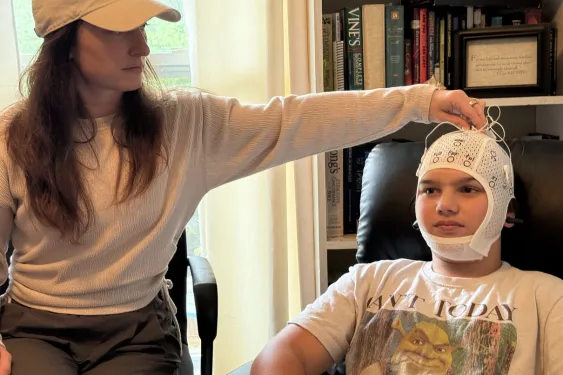
Neurofeedback gently nudges the brain out of stuck patterns, so it can reorganize and regulate itself more effectively. During training, you simply watch a favorite movie, listen to music or enjoy an audiobook while your brain receives real-time feedback and learns more effective patterns.

bRAINWAVES
Your brain constantly produces electrical patterns called brainwaves.
Each brainwave is defined by its speed and pattern.
The brain produces different patterns for different activities and should shift between them easily.
Dysregulation is when the brain gets stuck in the wrong pattern at the wrong time.

qeeg brain map
Done before training to create a custom plan.
Shows what is happening but does not change anything.
Used periodically throughout training to track progress and guide adjustments.
The report breaks down your brainwave activity into simple visuals.

Brain Training
Also called neurofeedback or brainwave regulation.
Is technology-driven learning for the brain.
Provides real-time feedback so the brain learns to function better.
Encourages the brain’s natural ability to reorganize and improve over time.

what to expect
Helps improve overall brain performance and well-being.
Most people train 2–3 times per week.
Subtle improvements often appear after the first 15–20 sessions.
Lasting changes develop as the brain learns and reinforces new patterns.
Honest Concern
How Will I Know If It’s Working?
It’s a fair question. Neurofeedback isn’t based on guesswork. A qEEG brain map gives us an objective starting point, and progress can be measured throughout training to see how brainwave patterns are changing over time.

Everyday Life Got Easier
We began seeing improvements in her behavior and changes that made a difference in our day-to-day life.
More Calm. More Focus.
I feel more relaxed and less anxious, with more energy, better focus and a greater sense of calm.
Clearer Under Pressure
I noticed a difference in my thinking and was able to stay calm, think rationally and make better decisions under pressure.
Good To KNow
Before You Book
When can I expect to see results from Neurofeedback?
Neurofeedback is a steady and incremental process.Generally, most people report observing changes after approximately 15-20 sessions. Every individual’s experience with Neurofeedback is unique and some people may notice changes earlier or later than this average.
Can You Keep Taking Medication While Doing Neurofeedback?
Starting Neurofeedback does not mean that you must stop taking your prescribed medications. Medication helps manage symptoms. Although it may slow progress, your brain can still learn. As you progress through training your brain will start to better regulate. When this happens your meds may start to cause uncomfortable side effects. Working closely with your prescriber plays a key role in your success with Neurofeedback. Your doctor can lower the dose of your prescribed medications.
Should I Reduce My Medicine Intake?
Neurofeedback increases the neural pathways in the brain. This can increase or change the neurotransmitters which affects medication potency. This is why a reduction in the dosage is often beneficial and required. Our clients find talking with their doctor about every 10 sessions is an effective way to find the dosage that works best.
Does it hurt?
Neurofeedback is painless, non-invasive and drugless. It’s similar to going to the gym, your brain may feel tired at times but it is pain-free!
Are there any adverse side effects?
Neurofeedback is a gentle learning process. Some people experience ups and downs in mood, but the side effects are usually a response to relaxation, similar to the aftermath of a good massage.
Is Neurofeedback suitable for everyone?
Neurofeedback is a safe, drugless procedure that can be beneficial for people of all ages, depending on the specific conditions and goals. It is best to consult with your health care provider to address your specific concerns. Our team is happy to collaborate.
How frequently do I need to do sessions?
You should strive to do at least 2-3 sessions a week. Consistency is key with Neurofeedback. Imagine learning a new instrument—if you only practiced once every few weeks, it would take much longer for you to be good at playing! Establishing a rhythm in your Neurofeedback sessions helps to cultivate continuity and enhances the overall effectiveness of the brain’s learning process.
With the ability to train in the home, it is perfectly safe and not unreasonable to do a session 1-2 times daily once you are given the go-ahead by your provider. However, the optimal frequency could differ based on individual needs. It is important to have a discussion with your provider about your personal circumstances, difficulties, and goals to find out what works best for you.
Will the effects last?
There are physical changes in the gray and white matter of the brain after 20 Neurofeedback sessions, creating new neural pathways that should sustain unless an unforeseen injury or exposure to toxins occurs.
Edwards Counseling and Consulting, LLC
(484) 946-3813
© 2026 • All Rights Reserved